Building and Tuning the Kizuka MOSFET Amplifier: A DIY Audiophile Journey
28th Sep 2026
An inside look at assembling, modifying, and housing a pair of exceptional high-fidelity audio amplifiers — combining precision engineering, custom CNC chassis work, and high-end lateral MOSFETs.
Assembling the Kizuka Sym MOSFET Amps
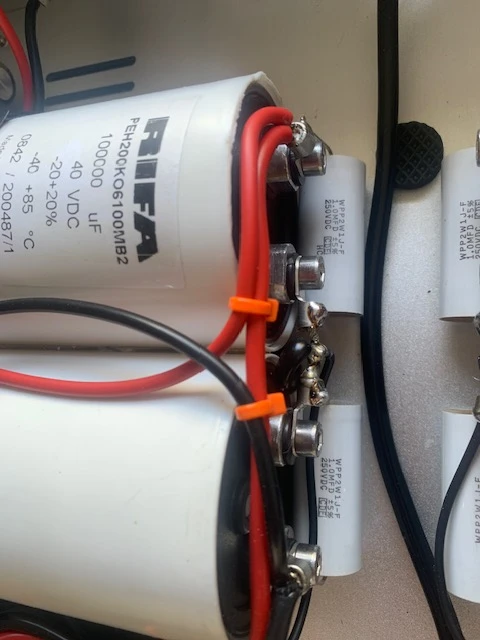
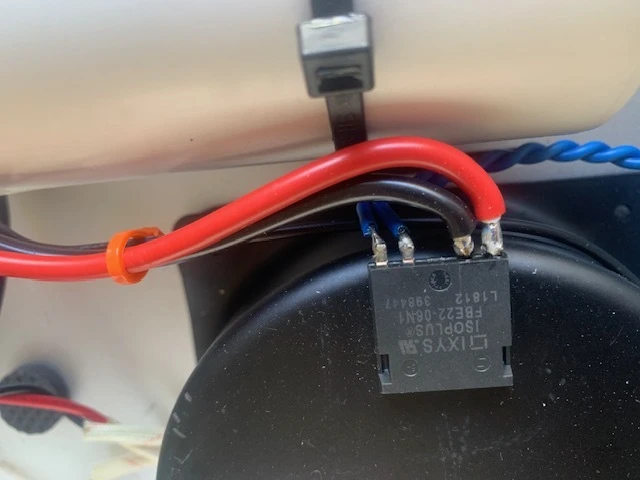
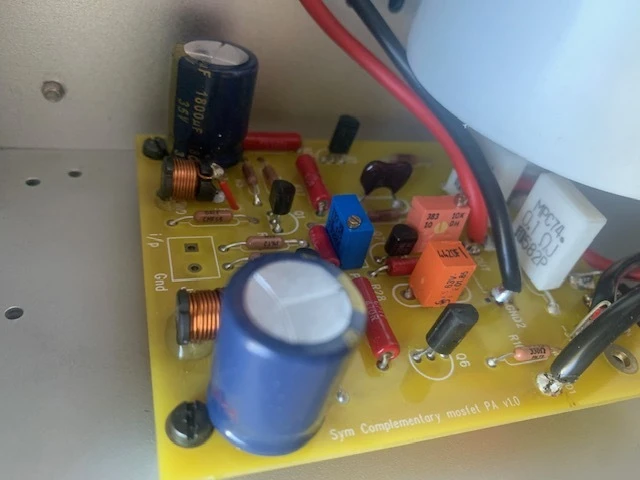
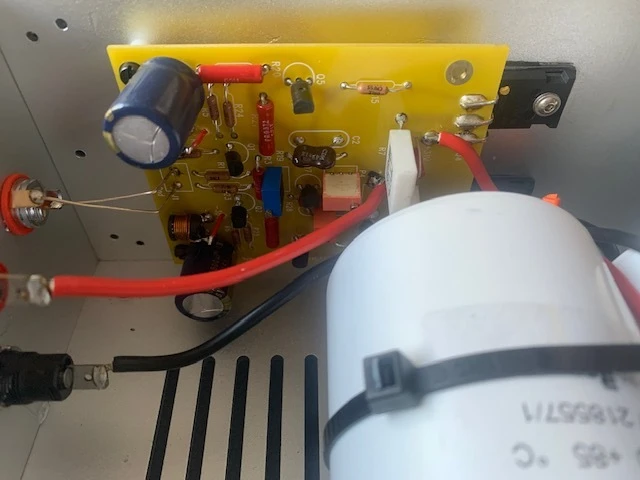
I just assembled the third pair of these Kizuka sym MOSFET amps. For this build, I tied the power and pre-section together with a small degradation resistor and a small ferrite coil, followed by an 1800µF capacitor on each rail, well decoupled from the power MOSFETs. I also used Exicon lateral devices since I had matched ones on hand. The power supply features 2x 100,000µF / 40V RIFA capacitors, IXYS special low-noise soft-recovery fast rectifiers, and separated, shielded toroidal transformers.
These are ingenious amplifiers, I must say. They are easy to use, dead quiet (really amazingly quiet even on 105 dB speakers), and boast superior quality comparable to the venerable Kaneda 167 built by Teksanyo. They are DC-coupled with no relay in the path, and the switch-on and switch-off thump is soft and negligible. I added a small input parallel styroflex capacitor to prevent radio frequency pickup.
While these amplifiers do not have massive power — measuring around 38 to 42 watts — they sound killer good. I hope to buy another pair or two to integrate them into some rare broken design amplifiers, such as the Solen Tigre by the French company Solen and a Rational Audio amp by Czech icon Jiri. Thanks for these great, super-fast assembled kits!
The Enclosure, Component Choices, and Listening Impressions
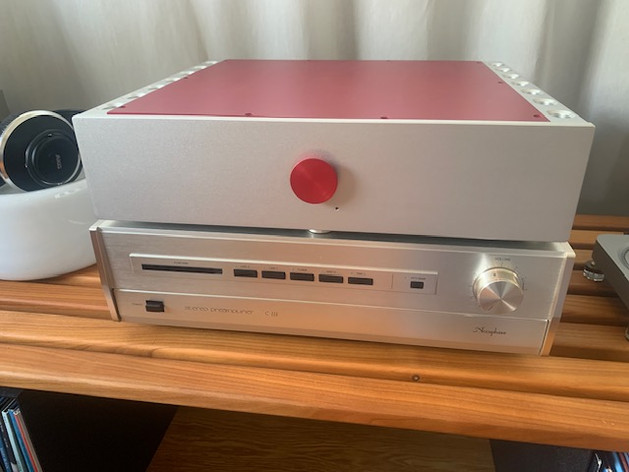
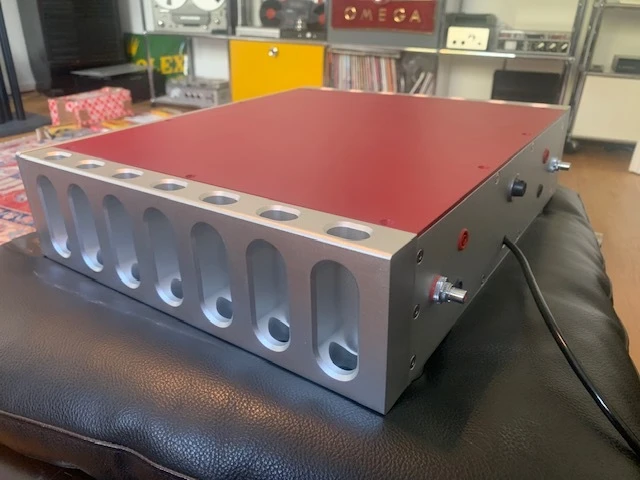
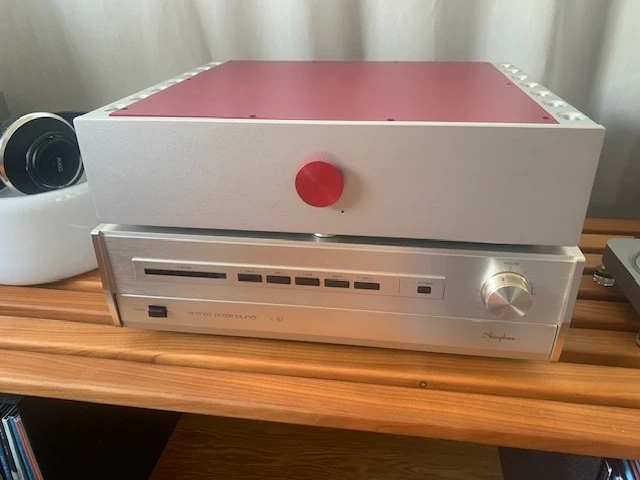
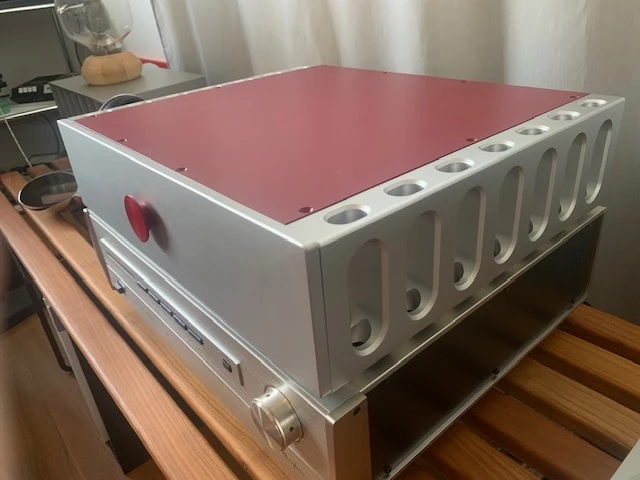
The physical build is a beauty. I used a massive CNC-machined case and incorporated elements in Japanese red to pay homage to the origins of the design. Placed next to my Sansui BA-5000 and the venerable Kenwood L-08M — both thoroughly overhauled and upgraded — it looks stellar.
I really like this Kizuka design, and it’s important to note that I use Exicon lateral MOSFETs (EX10N20) rather than HEXFETs. These are a modern take on the classic Hitachi 2SK50/135 lateral MOSFETs, prized for being highly linear and exclusively made for audio. One crucial detail when building the Kizuka is using a high-quality offset trimmer. Because the amplifier gets a bit warm inside, I initially experienced offset jumps due to a sub-par trimmer on one channel, which is something to watch out for and upgrade.
Comparing various legendary topologies, it’s fascinating to look at units like the Teksanyo Kaneda No. 167 stereo amplifier — a quirky, powerful concept with unbelievable current capabilities that drives a fast, nimble bass. Similarly, the Dynavector HX1.2 uses older metal TO-3 types and pushes music effortlessly without compression or distortion, making even demanding speakers like my Dynaudio Confidence 5 sing.
To sum it up, these amplifiers that rely on just two current output devices consistently sound more detailed, exact, and spacious than most amps with paralleled devices. The Dynavector stands out for sheer power, the Kaneda for its quirkiness, and the Kizuka for its sheer usability and breathtaking purity. I plan to order more Kizuka kits to revive my defective Solen Tigre and Rational Audio amplifiers.
Written by Rene Savelkoul